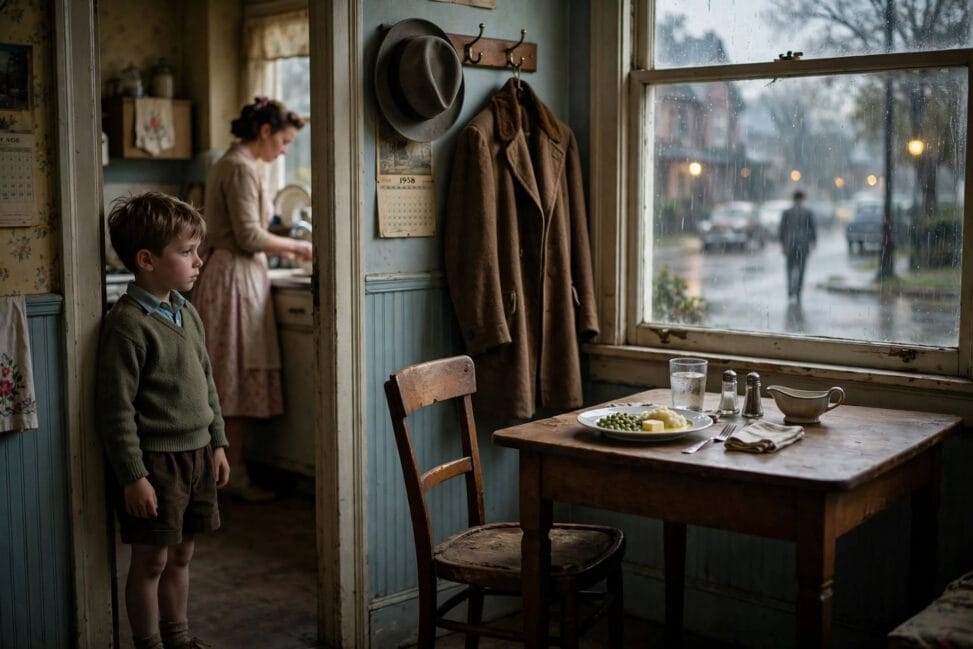
A father does not have to disappear to become absent. He may leave for work and never truly return. At the family table, he may withhold tenderness, truth or protection. The finest novels about absent fathers understand that children feel these losses keenly — and often carry them into adulthood, where they shape love, loyalty, anger and family memory.
These are more than stories about unhappy homes. In them, paternal absence drives the plot: it may hide behind betrayal, leave a gap in family history, or create a hunger that draws a son or daughter towards danger. Some span generations; others remain close to one damaged household. All recognise that what a father withholds can matter as much as what he does.
Why novels about absent fathers are so powerful
An absent father creates a question. Why did he leave? Did shame drive him away? Did war, work or fear make him unreachable? Or did he simply refuse responsibility?
Children rarely receive clear answers. In that empty space, imagination creates hope, blame and sometimes both.
This ambiguity gives fiction momentum. A missing or emotionally distant father can become a private grief, but his absence can also connect to class, migration, war, religion and expectations of masculinity. Strong novels resist turning every absent father into a villain. Some are cruel. Others are weak, frightened or lost long before they leave.
The distinction matters when a child must decide whether understanding a parent also requires forgiveness.
9 novels about absent fathers to read
The Goldfinch by Donna Tartt
Theo Decker’s father abandons the family before catastrophe tears through the rest of his childhood. When he returns, the reunion brings no rescue. Instead, Theo enters a world of neglect, intoxication and moral danger.
Tartt presents paternal absence not as one event, but as a vacancy that other destructive forces quickly fill. Theo does not simply miss a father. He spends years surviving the consequences of having no reliable adult centre.
The God of Small Things by Arundhati Roy
In Roy’s Kerala-set novel, Estha and Rahel grow up after a family rupture removes their father from daily life. Their parents’ failed marriage becomes one thread in a larger web of caste, shame, forbidden love and inherited cruelty.
The father’s absence remains part of the children’s emotional world, especially as other adults fail to protect them. Roy shows how children absorb adult silences long before they understand what those silences mean.
The Fishermen by Chigozie Obioma
A father leaves home for work, and four brothers begin to roam beyond the boundaries he once enforced. That small change sets the tragedy of The Fishermen in motion.
A prophecy alters the brothers’ relationship and fractures the family. The father does not simply desert them; his temporary absence creates the space in which fear takes control.
The House of the Spirits by Isabel Allende
Esteban Trueba remains physically present for much of Allende’s multigenerational saga, yet he is absent in the ways that matter most. Violent, authoritarian and emotionally closed, he rules the household while his children grow around the damage he creates.
The consequences spread through generations. This makes the novel especially powerful for readers interested in absent fathers in the emotional rather than literal sense. Allende also shows how domination and silence pass through a family like an inheritance.
The Brothers Karamazov by Fyodor Dostoevsky
Fyodor Pavlovich Karamazov is a father in name but barely in duty. Negligent, predatory and self-serving, he leaves his sons to make sense of themselves without guidance or safety.
Their different responses — faith, reason, sensuality and rage — drive the novel. Dostoevsky asks what a son owes a father who failed him, whether hatred can become an inheritance, and whether a family can escape the violence that formed it.
The Kite Runner by Khaled Hosseini
Baba is not absent in the conventional sense. He dominates Amir’s childhood, admired by others and feared by his son.
Yet Baba cannot offer emotional openness, and the truth he conceals shapes two boys’ lives across Afghanistan’s upheaval and exile. The novel shows that absence can exist even inside devotion. A father may provide, protect and love while still withholding the words that could change everything.
The Dutch House by Ann Patchett
Danny and Maeve Conroy grow up in the shadow of a magnificent house, a distant father and a mother who has left.
Their father’s decisions about property, marriage and money seem practical, but they carry a heavy emotional cost. After his death, the siblings remain bound by the childhood he failed to protect.
Patchett uses restraint rather than melodrama, which makes the emotional absence feel even sharper.
Hamnet by Maggie O’Farrell
William Shakespeare is neither monstrous nor uncaring in O’Farrell’s imagined portrait. His work repeatedly takes him away from his family.
When grief strikes, the distance between father, mother and child becomes almost unbearable. Hamnet explores what happens when a father is absent at the moment his family needs him most, and how art can grow from sorrow without repairing it.
The Heart’s Invisible Furies by John Boyne
Cyril Avery grows up with an adoptive father who repeatedly reminds him that he is not a “real” Avery. His birth father remains an unanswered question, while his adoptive father offers status without warmth.
Across decades of Irish social change, Cyril searches for a life in which he can feel fully known and loved. The novel shows how family abandonment may reflect not only individual failure, but also a culture built around shame and concealment.
Choosing the right father-son or father-daughter story
Readers who want strong narrative momentum may prefer The Goldfinch or The Fishermen. Those drawn to family sagas and historical consequence may gravitate towards The House of the Spirits, Hamnet or The Heart’s Invisible Furies. The Brothers Karamazov brings philosophical weight, while The Dutch House offers a quieter and more intimate form of loss.
The right choice also depends on the kind of reckoning you want. Some novels leave room for compassion towards flawed fathers. Others insist that love cannot erase harm.
What connects them is the refusal to offer an easy cure for absence.
For readers drawn to stories where history presses upon private grief, The Fourth Gold Bar belongs in this territory too: a father, a son, a war and secrets whose consequences stretch far beyond the choices that created them.
The most memorable fiction does not simply ask us to judge the absent father. It asks what his absence does to those who remain — and what they must do to live beyond it.