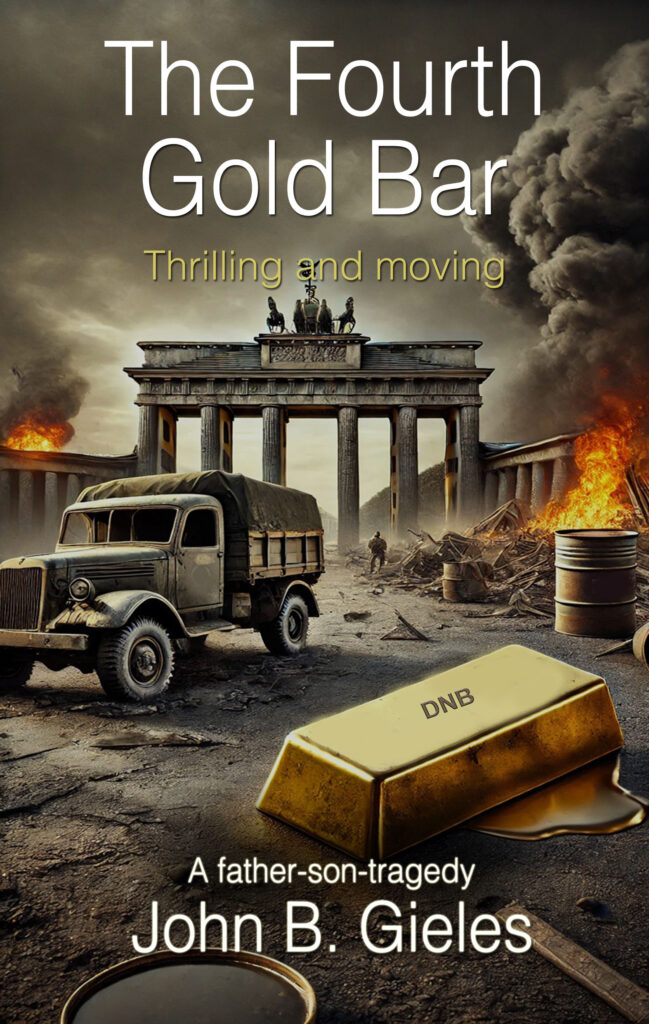
The Fourth Gold Bar is a layered, cinematic work of autofiction about war, family, loss, and the deep longing to be seen and loved.
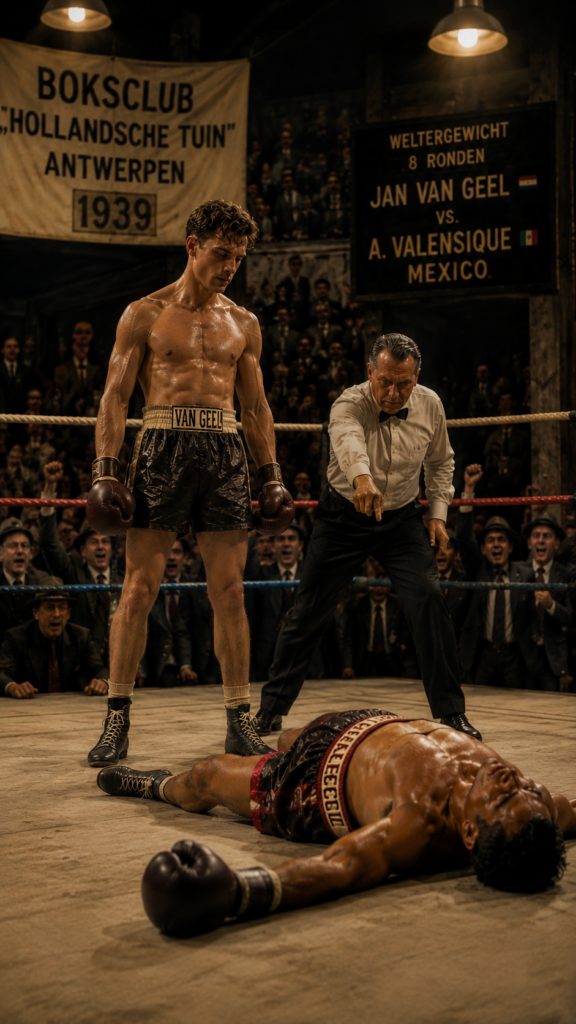
During the Second World War, the restless Jan van Geel ends up in Nazi Germany. Amid forced labour, danger, betrayal, and a hidden cache of gold, he struggles to survive. Yet when the war is over, he is unable to return fully to an ordinary family life. His silence, his choices, and his prolonged absences cast a shadow over everyone who loves him.
His son Jonny suffers most from the consequences. At the age of four, he is first placed in a boarding institution in Antwerp and later in Lievenshove, where he will spend thirteen years. Deprived of the natural security of a home, he grows up among other children and a succession of caregivers. His longing for love, recognition, and a sense of safety runs like a thread through his life.
While Jan is haunted by what he experienced during and after the war, Jonny tries to understand why his father abandoned him. The gold bars connect their lives and become a symbol of a past that can be hidden, but never truly erased.
At the emotional heart of the novel lies the complex relationship between father and son. Jonny’s search for his father, his origins, and a place where he can truly feel at home makes De Vierde Goudstaaf a moving story about loss, resilience, and the enduring human need to belong.
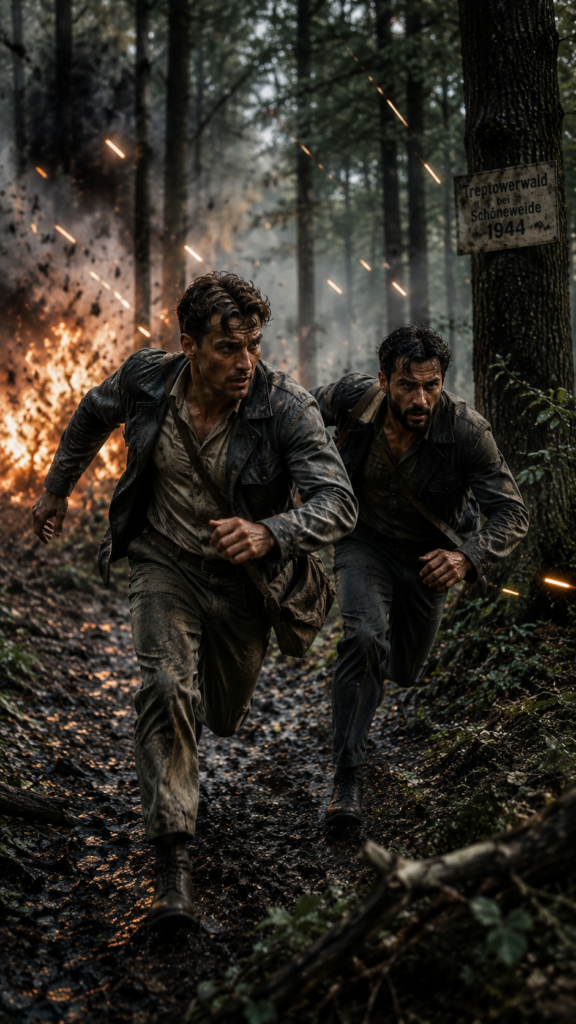
Ontsnappen uit Arbeidslager Schöneweide.

Het redden van de goudstaven
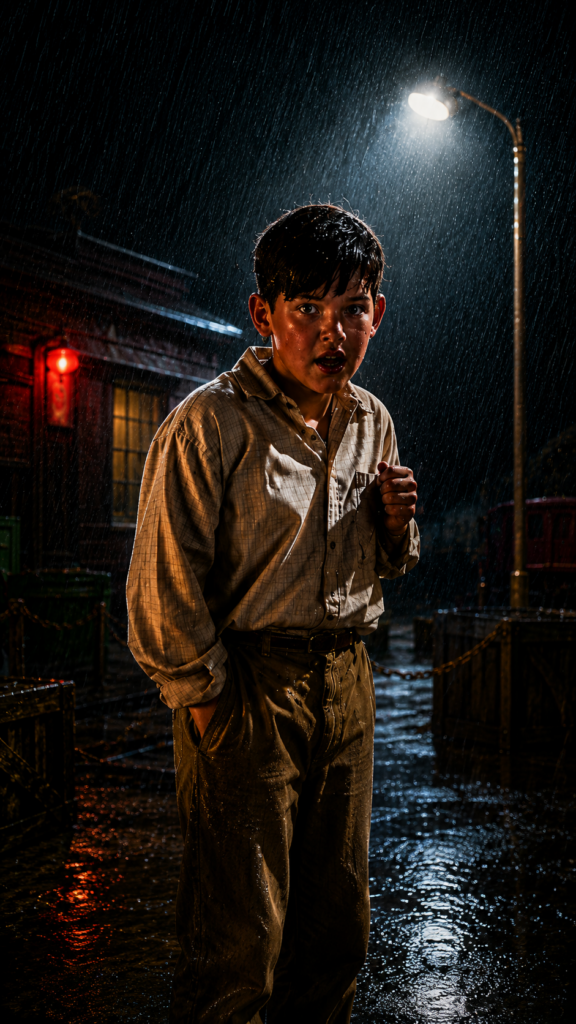
Jonny’s loniless