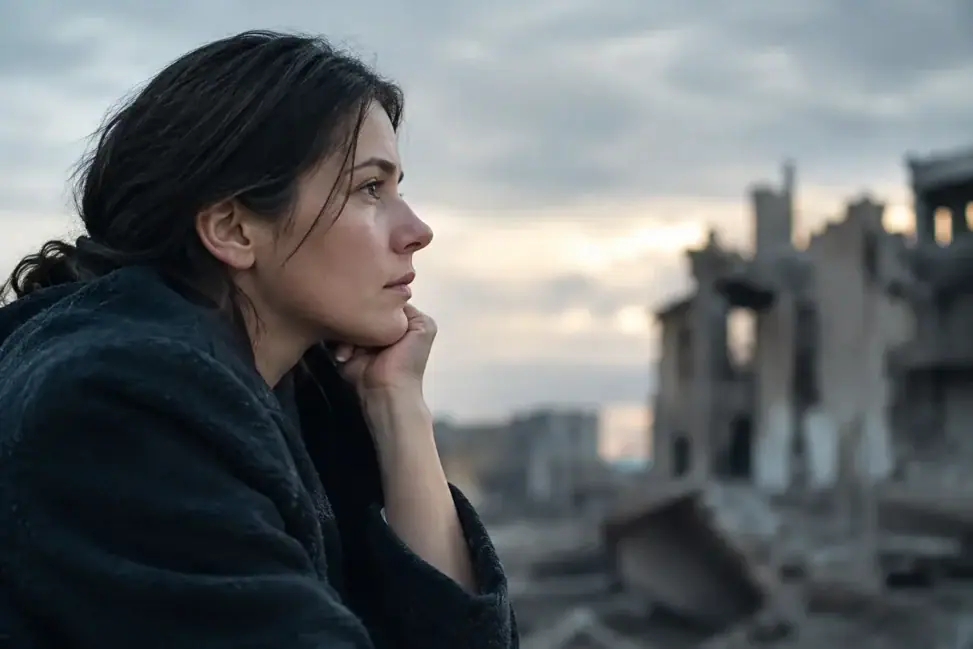
The war is over. The guns have fallen silent. A man returns home, perhaps carrying a medal, perhaps carrying nothing anyone can see. His son notices only the emotional distance in his father’s face, a temper that erupts without warning, and questions no one will answer.
This is where wartime trauma fiction finds its deepest power: not only in the terror of battle, but also in what happens when survivors try to rebuild their lives.
For readers drawn to Second World War history, family secrets and emotionally charged suspense, these novels offer more than a journey into the past. They expose the private cost of public events. They ask what becomes of love when war changes the person who should offer it, and what children inherit when families conceal the truth.
War Does Not End When a Soldier Comes Home
A conventional war story may end with liberation, surrender or a soldier’s return. Wartime trauma fiction asks a more difficult question: what happens afterwards?
Trauma rarely follows a predictable pattern. It can emerge through silence, violence, shame, restlessness or an inability to accept tenderness. A character who survives occupation, imprisonment or combat may become emotionally hardened to endure those experiences. That hardness might keep him alive during the war, yet destroy the peace he hopes to enjoy afterwards.
The strongest historical novels therefore refuse to portray damaged veterans as mere symbols. Instead, they reveal their humanity and contradictions. Such men may display bravery and cowardice, tenderness and cruelty, honour in one moment and unforgivable indifference in the next.
Their families struggle to understand whether the war transformed the men they once knew or merely exposed something that had always existed beneath the surface.
That uncertainty creates powerful tension. A father can be absent without ever leaving home. His wife may remain loyal while living beside a stranger, while their son spends decades trying to understand a silence he cannot break.
Silence Becomes an Inheritance
Children of wartime survivors often discover their family history through fragments: a photograph with a missing name, a newspaper cutting folded into a drawer, an unexplained scar or an old friend nobody mentions.
Gradually, the gaps become part of the family’s story.
In fiction, those gaps provide fertile ground for suspense. Yet a secret must carry emotional weight to matter. Discovering that a father stole, betrayed someone or pursued a forbidden relationship becomes especially powerful when the revelation changes how his child understands himself.
This lies at the heart of inherited trauma.
The next generation may never have heard a bomb fall, yet children can still experience the consequences of war. A parent’s sudden anger may teach them caution. A disappearance may create lasting insecurity. Repeated evasions can undermine trust.
War enters the family home and remains there long after soldiers have put away their uniforms.
Wartime Trauma Fiction Is Not Only About the Battlefield
Battle scenes can be gripping, horrifying and essential to a historical novel. Nevertheless, wartime trauma fiction often becomes more memorable when it shows how conflict reaches kitchens, bedrooms, railway stations and boxing rings.
Sometimes the most painful struggle begins when a man returns to his childhood street and realises he no longer belongs there.
A compelling novel may follow a soldier through extraordinary danger. But it also considers the wife waiting for letters, the child watching the front door and the lover who fears that the truth will destroy their relationship.
Civilian suffering deserves equal attention. Occupation, hunger, displacement, persecution and impossible moral choices leave scars of their own.
This wider perspective becomes especially compelling in stories inspired by real events.
History supplies dates, places, arrests, victories and defeats. Fiction gives those events an emotional pulse. Through imagined scenes and dialogue, readers can stand beside people who cannot foresee whether their choices will save them, destroy them or haunt their children decades later.
Authors carry a responsibility when transforming historical suffering into fiction.
Real suffering should never serve merely as decoration for an adventurous plot. Writers risk diminishing atrocities when they turn them into background atmosphere or use trauma simply to make a character appear mysterious.
A more thoughtful approach explores consequences patiently and specifically. It reveals how extraordinary events influence everyday behaviour, personal relationships and the truths that characters struggle to express.
Suspense Gives Pain a Forward Motion
Emotional depth does not require a novel to move slowly.
On the contrary, suspense can make wartime trauma more immediate and compelling. A hidden cache of gold, a betrayal between friends, forbidden love or the discovery of an old crime gives readers a reason to keep turning pages.
Yet beneath the question of what happened lies another, more intimate question:
Who will pay the price?
The most affecting stories connect these two forms of tension.
A robbery becomes more than a criminal act when desperation, greed or a promise made under fire drives the people involved. A father’s disappearance becomes more than a family tragedy when the reasons for his absence remain hidden from his son.
Every revelation can move the plot forward while increasing the emotional pressure on the characters.
Finding the right balance matters.
Too much history without narrative momentum can feel distant, like a lesson delivered from behind glass. Excessive action without emotional consequences, meanwhile, can reduce war to little more than a dramatic setting.
Wartime trauma fiction succeeds when readers experience the past as both dangerous and intensely personal.
The Fourth Gold Bar explores precisely this collision between public history and private suffering.
At its centre stand a father, a son, a devastating war and choices whose consequences extend far beyond the original events.
The world of boxing, betrayal, forbidden love and stolen gold provides the excitement of a historical thriller. Beneath that adventure, however, lies a more disturbing question.
What happens to the people left behind when courage, ambition and survival come at the expense of love and responsibility?
The Truth May Not Heal Everything
Readers often expect a family secret to lead towards an emotional resolution.
Sometimes it does. A confession may bring relief, restore a damaged relationship or finally offer a son the explanation he has sought throughout his life.
But fiction becomes more convincing when it acknowledges that some wounds resist healing.
Understanding why a father failed does not automatically excuse his behaviour. Discovering the reasons behind a mother’s fear cannot erase the loneliness her silence created.
The truth may help someone understand a painful experience without removing the pain itself.
This is not pessimism for its own sake. It reflects the complexity of human relationships.
Knowledge can change how people interpret their past, even when they cannot repair what happened.
A son who discovers his father’s wartime experiences may finally recognise the frightened young man beneath the older man’s cruelty.
At the same time, he may conclude that suffering never gives anyone the right to inflict suffering on others.
Compassion and moral judgement need not exclude each other.
Why Father-and-Son Stories Cut So Deep
The father-son relationship carries particular emotional force in wartime fiction because it connects historical events with personal identity.
A boy wants to know more than where his father fought or what he endured during the war.
He also wants to understand what his father’s experiences reveal about courage, failure, masculinity and the kind of man he himself might become.
For fathers, the emotional pressure can be equally intense.
After the Second World War, society often expected returning servicemen and survivors to resume ordinary life without complaint. Families needed them to provide, protect and remain strong.
Many lacked the language, encouragement or support to describe their experiences.
Some sought refuge in work, sport, alcohol or emotional withdrawal. Others became restless, unable to settle into the peaceful routines they had once hoped to regain.
A few disappeared from family life altogether.
Historical fiction can acknowledge their suffering without overlooking its consequences for wives and children.
This is where the genre achieves genuine emotional seriousness.
It challenges the comforting assumption that survival and recovery mean the same thing.
A man may return alive from war without knowing how to live peacefully afterwards.
And his children may spend years trying to understand the difference.
What Readers Carry Away
The finest wartime trauma fiction does not invite readers merely to observe suffering from a safe distance.
Instead, it encourages them to recognise the fragile connections between generations.
A decision made in fear in 1944 may influence a marriage in 1964 and shape a son’s understanding of himself in 1984.
Such stories also restore complexity to our view of history.
The people who experienced war were not simply heroes, victims or villains. They were frightened, ambitious, devoted, selfish, courageous, resourceful and deeply flawed.
Sometimes circumstances forced them to choose between terrible alternatives. On other occasions, they made destructive decisions even when better possibilities existed.
Those contradictions make historical characters believable.
For readers, recognising them can bring unexpected clarity.
Family history rarely arrives as a complete and coherent inheritance. More often, it consists of fragments: what relatives said, what they concealed and what their children sensed but could never explain.
A powerful novel does not promise effortless forgiveness or a perfect resolution.
It offers something more enduring: the courage to confront silence, understand its consequences and prevent it from becoming the final word.
The Fourth Gold Bar by John B. Gieles is a historical novel inspired by true events. Combining the dangers of the Second World War with boxing, betrayal, forbidden love and stolen gold, it explores the emotional consequences of wartime choices and the relationship between a father and the son he leaves behind.