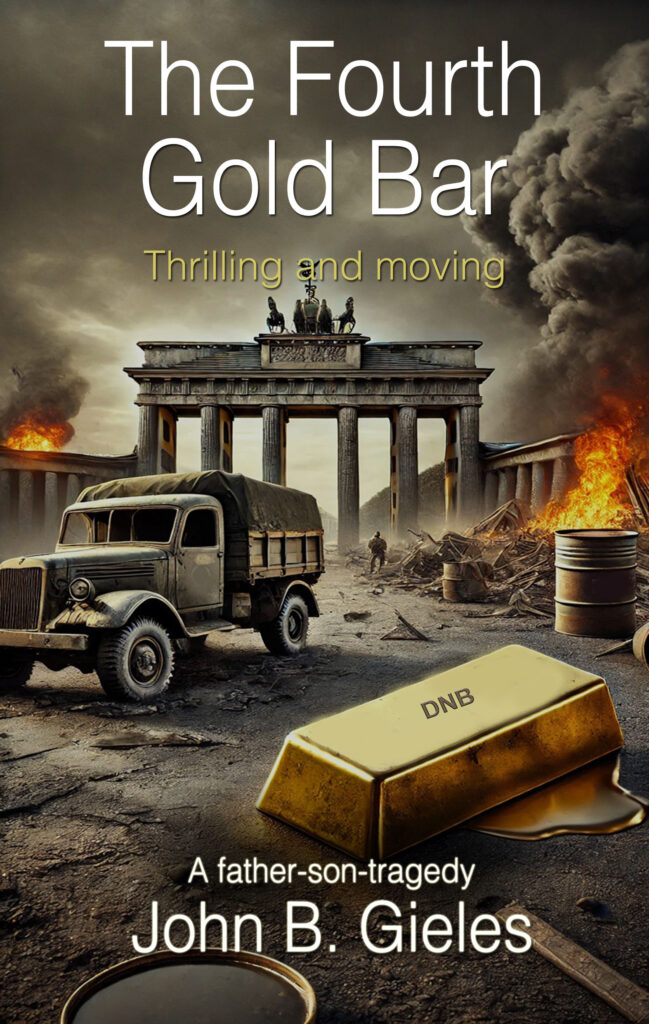
The Fourth Gold Bar is a layered, cinematic and deeply moving autofictional novel about ambition, courage and the longing to be seen and loved.
The story begins in a Europe being torn apart by war. Jan van Geel, a young and talented boxer with an irrepressible hunger for adventure and recognition, becomes caught up in events that will shape the rest of his life. Germany, forced labour, escape, love, betrayal and a mysterious gold robbery form the backdrop to a life in which courage and ambition are sometimes almost indistinguishable from recklessness.
But the true heart of the novel lies elsewhere. Jan’s son Jonny grows up in the shadow of his father’s absence. While Jan repeatedly chooses his own path, his son continues to hope for love, recognition and the promise of a life together. As that promise drifts further out of reach, longing and disappointment come to define Jonny’s childhood.
The women in the story, too, bear the consequences of war, origin and the choices made by others. No one is simply a hero or a villain. They are wounded, complex people trying to love, survive and find somewhere to belong.
Hidden gold and family secrets create suspense, but The Fourth Gold Bar is ultimately about something more fundamental: what parents pass on to their children when they are not there.
More than a war novel
The Second World War and the post-war years form the backdrop, but the novel is above all about human relationships. About ambition and courage. About guilt and loss. About the need for love. And about the question of how long a child can keep longing for recognition from a father who disappears again and again.
Why The Fourth Gold Bar?
The gold bars in the story represent more than possession and danger. They also become symbols of hidden truths and an unspoken past that continues to haunt them and, sooner or later, rises to the surface again.
You can hide a gold bar. You cannot hide the past.